Helen of Troy
3D Model of what Helen of Troy would have probably looked like if she existed.
Artistic depictions and artifacts from both the Mycenaean and Minoan cultures have been used as a basis for her hairstyle and jewelry. Her dress, its colors, and patterns are based on Homer's description, frescoes, as well as a figurine of a woman found in late bronze age Sparta, Helen's home.
She is surrounded by Anatolian-style spears and shields, as well as heaps of sling stones, many of which were found in the burned remains of Troy, and were probably used by its last defenders.
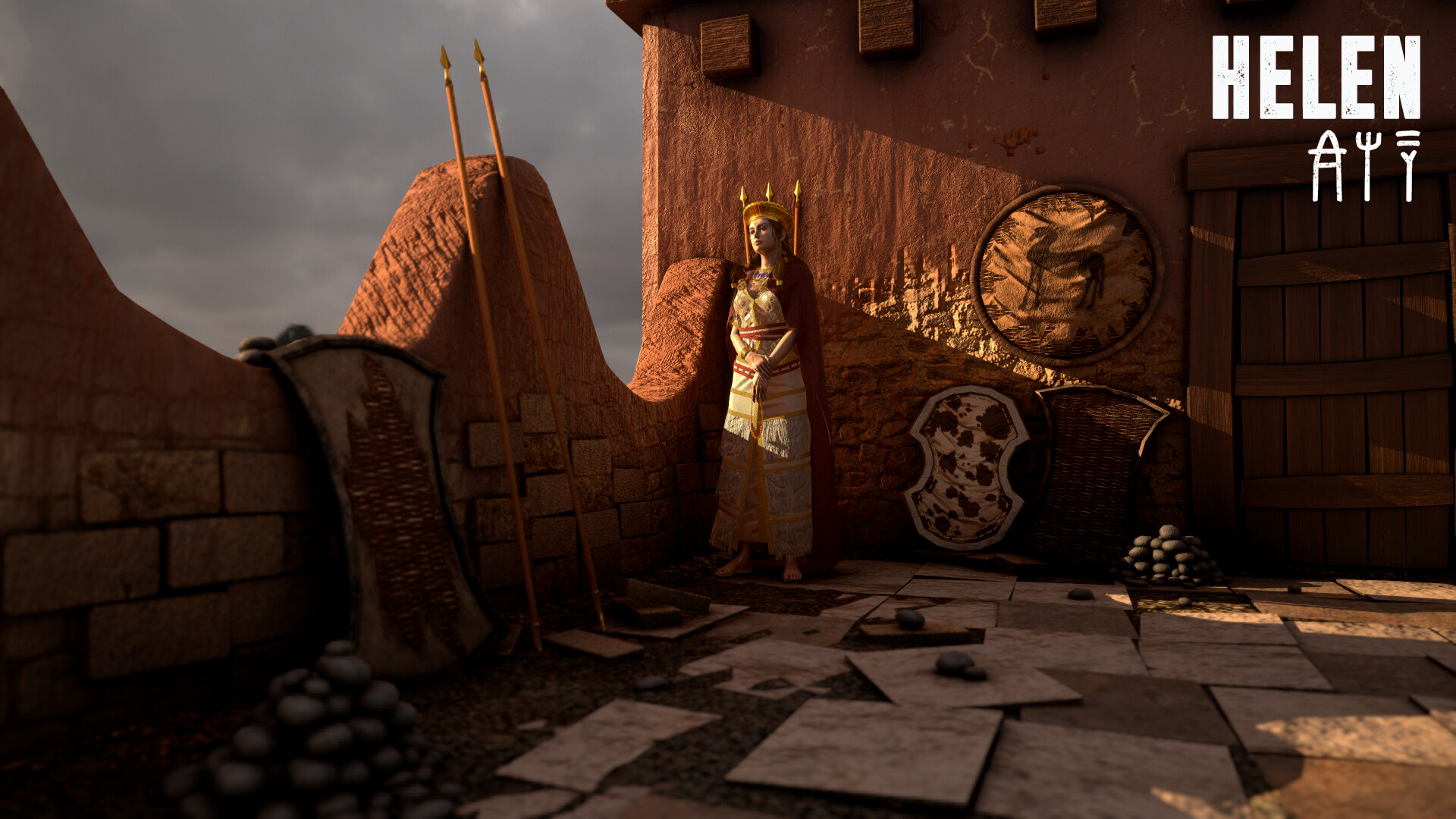
A lonely Helen stands on Troy's walls, during the nine-day truce for Hector's funeral.


Model turnaround.

Research on clothing, hairstyle, patterns. The scale pattern of the dress appears a lot in Mycenaean and Minoan art. I used a Spartan figurine of a noblewoman, dating to approximately the same time as the setting of the Iliad.

Research on makeup and jewelry. Golden, glass, terracotta, and amber necklaces were very common in Bronze Age Aegean fashion.